
Last updated September 10, 2026
Full 25-point door and opener safety check with every visit - springs, cables, rollers, tracks, and your LiftMaster or Chamberlain opener included
You get a price before we start. It does not change when the truck arrives.
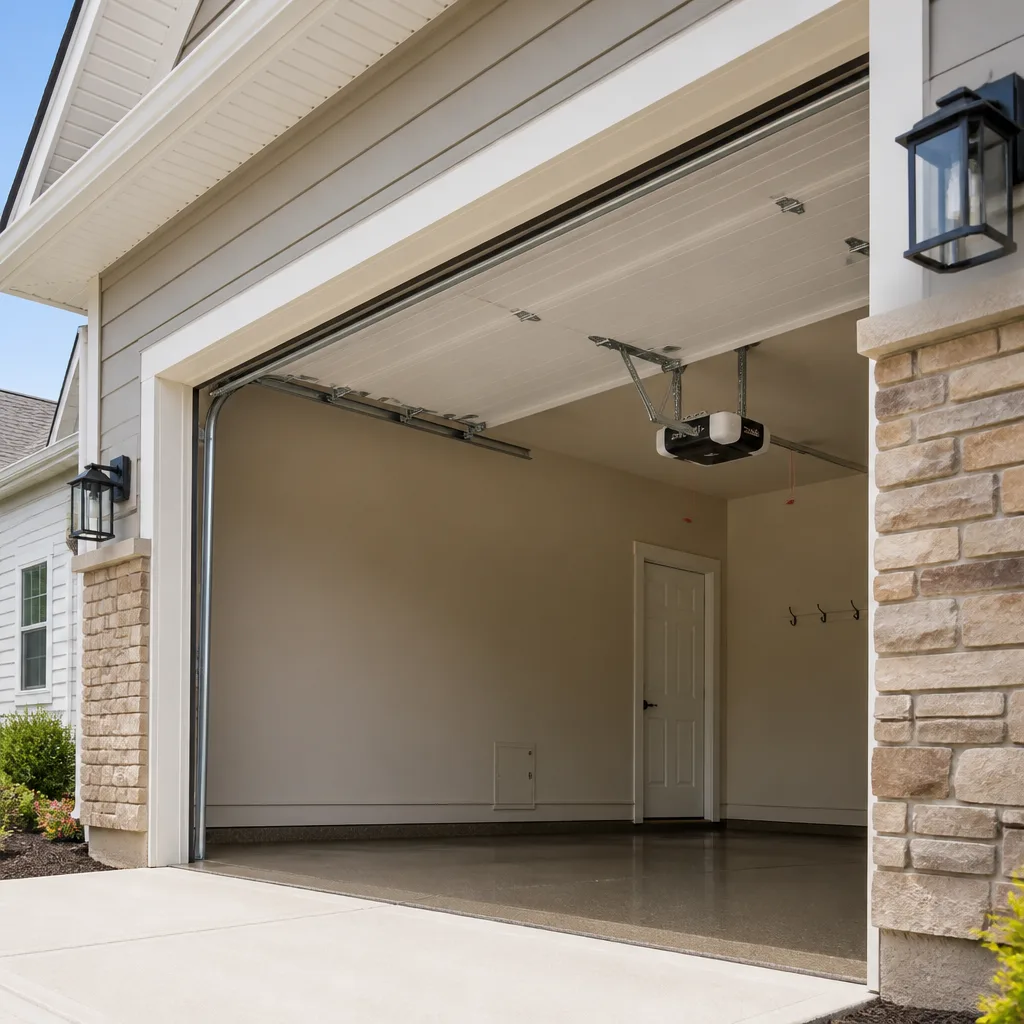
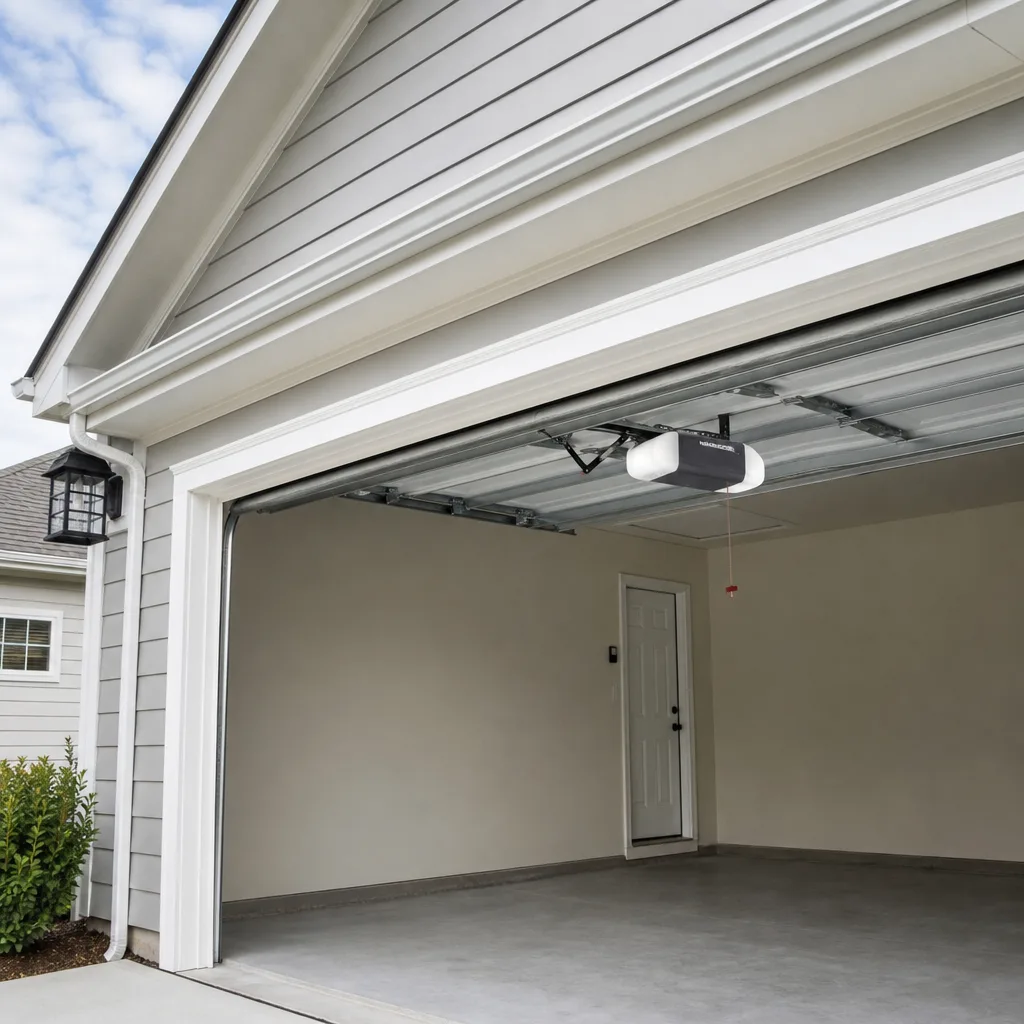
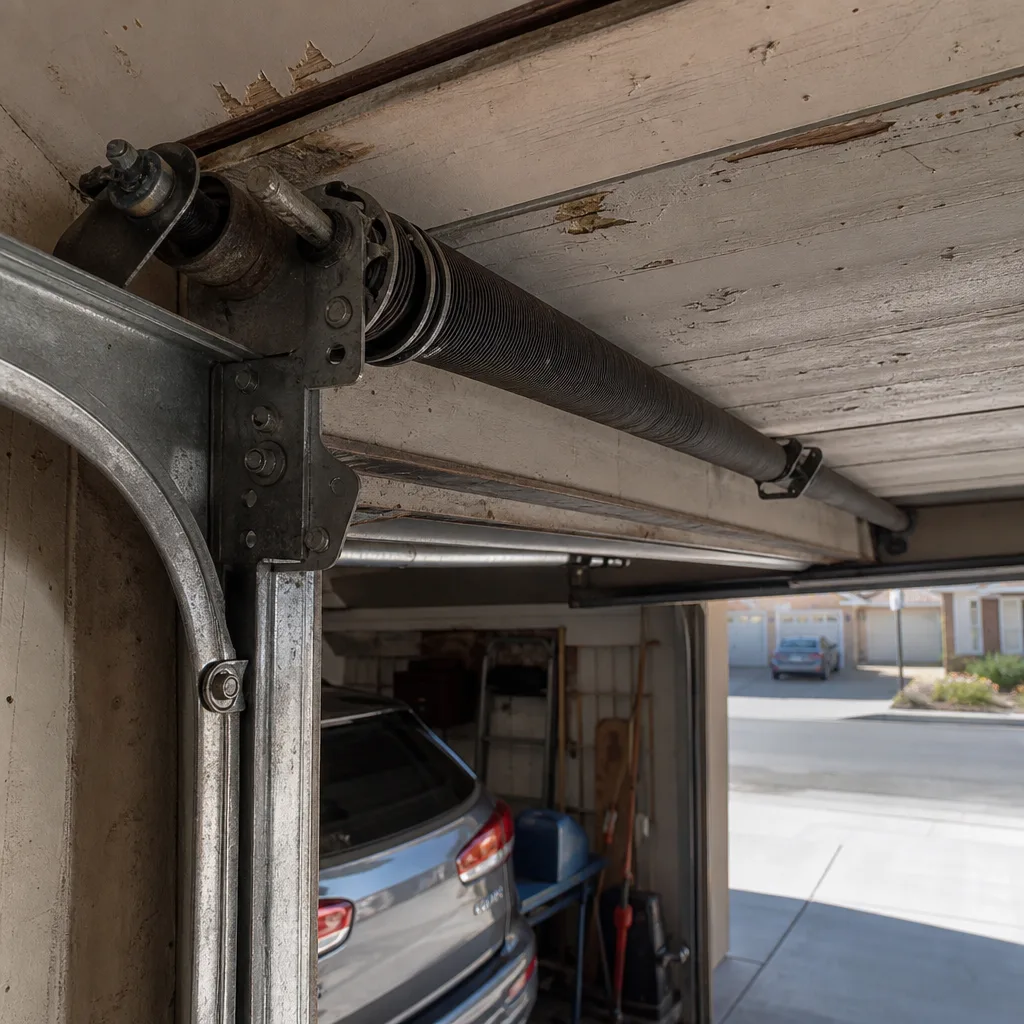 Before
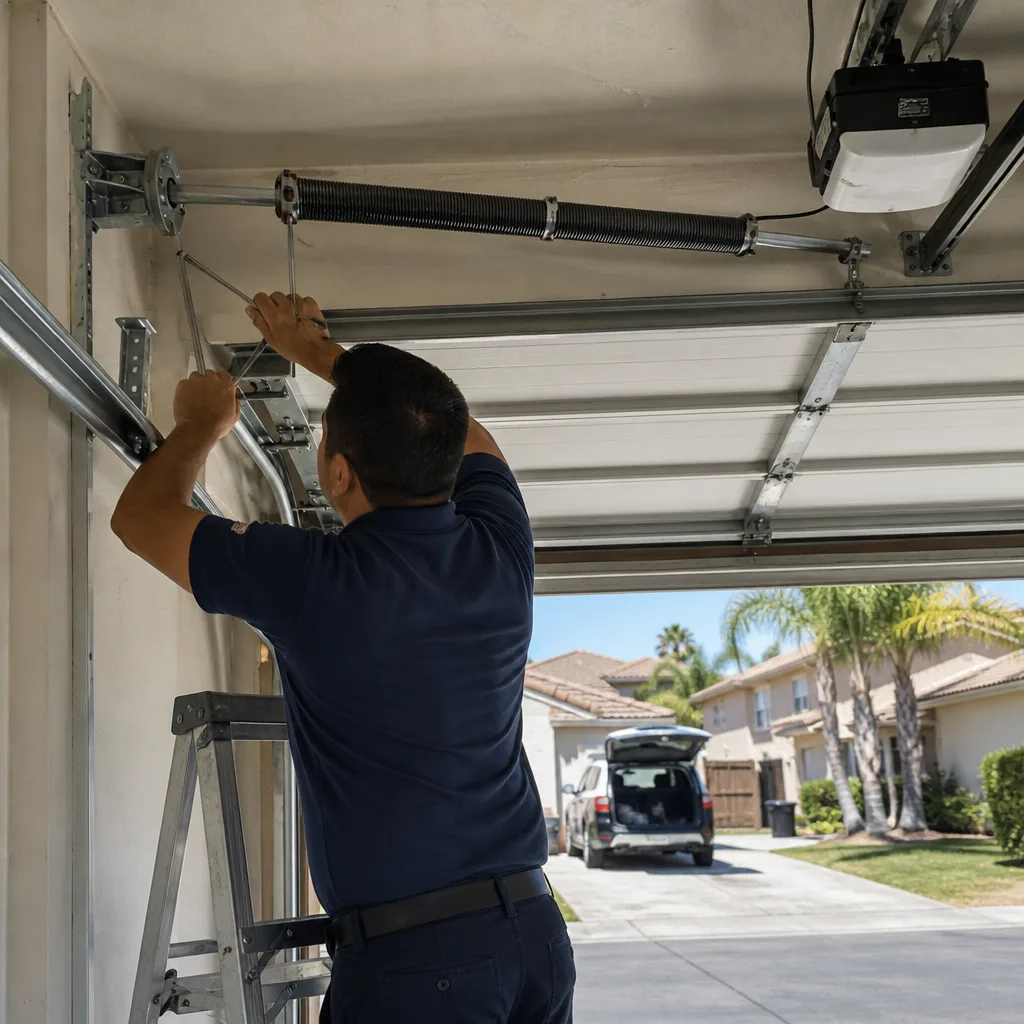 After
After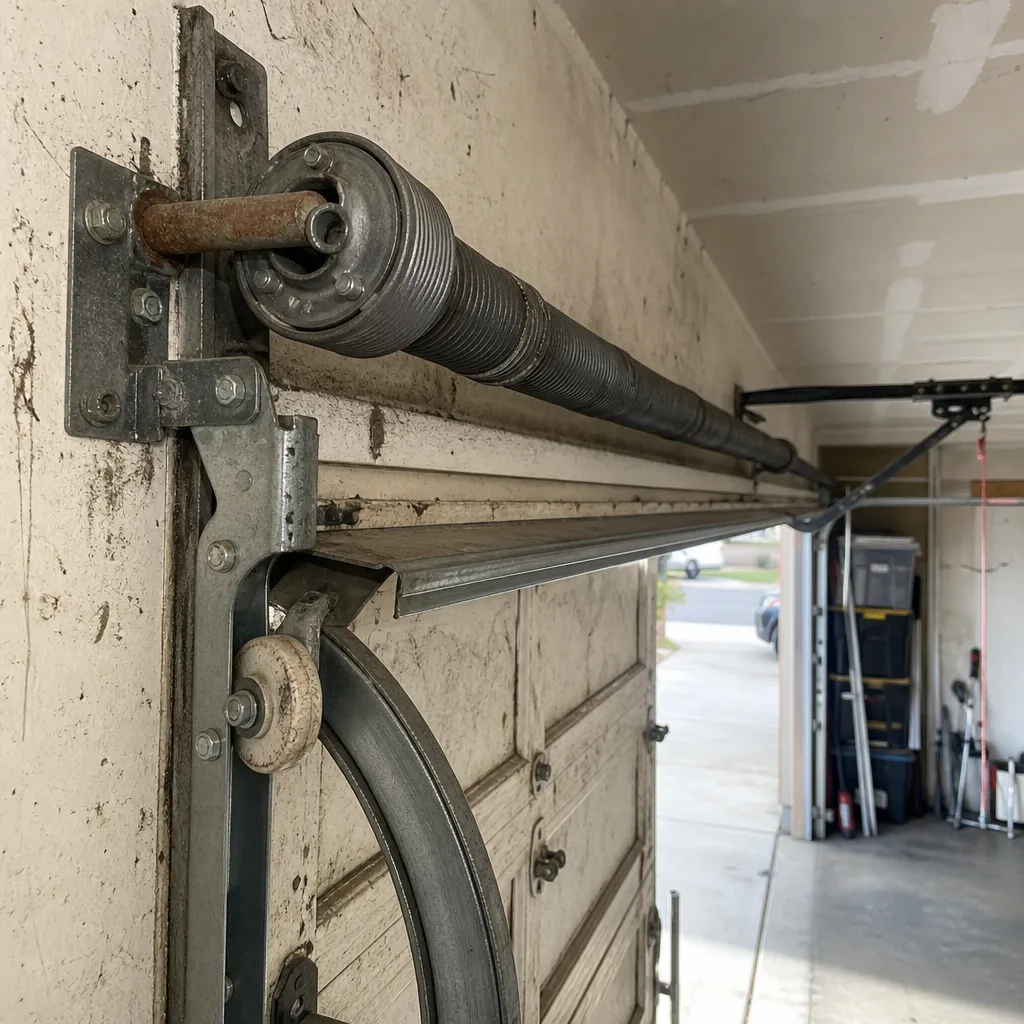 Before
 After
After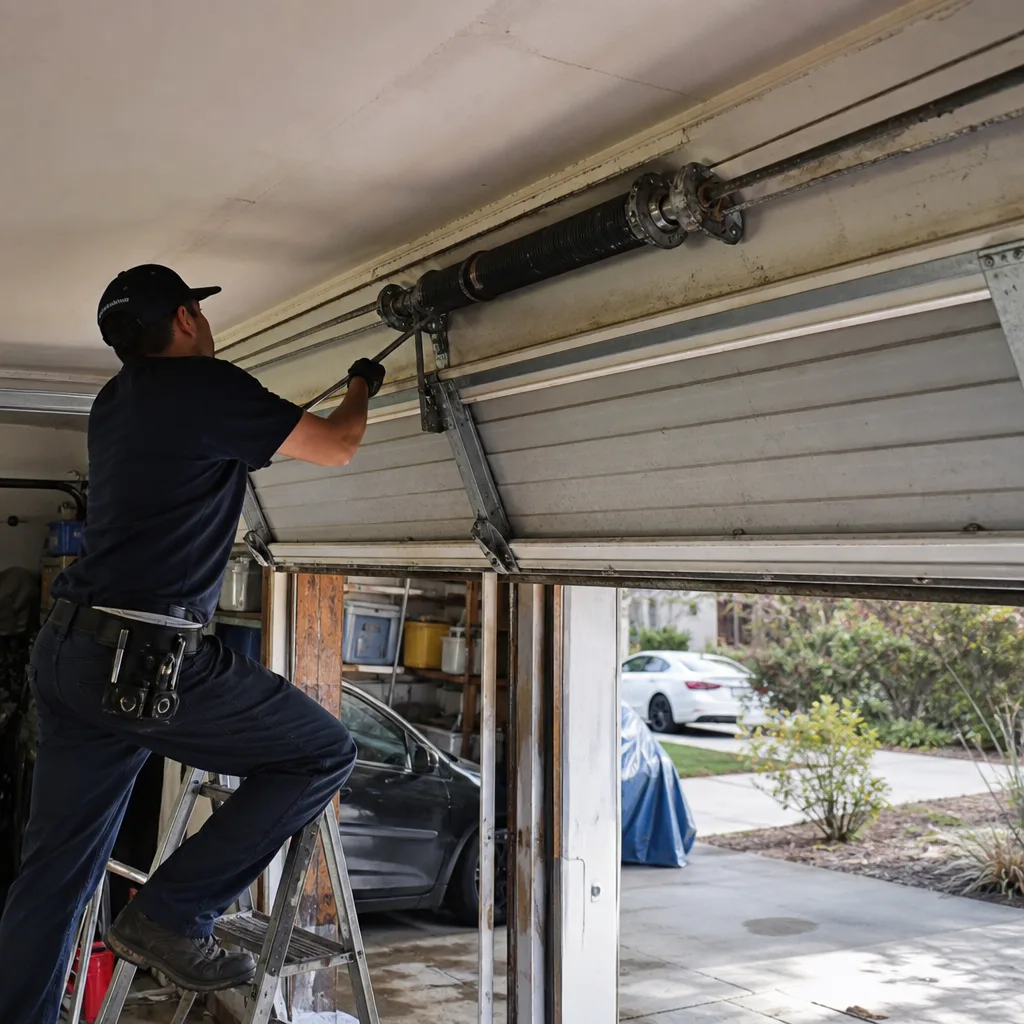 Before
 After
AfterGarage Door Warning Signs: A Oceanside Homeowner’s Reference Guide
A garage door that takes two tries to close is a nuisance. A garage door that closes fine but has a cable with visible fraying is a 300-pound liability, and one of those problems is quiet enough that you’ll never notice it without knowing where to look. Most Oceanside homeowners don’t call us because their door stopped working. They call because something sounded off three weeks ago and now the door is leaning sideways in the track. This guide will teach you the difference between an annoyance and a genuine safety hazard, what to look at, what to listen for, and when to pick up the phone before the door picks a very bad time to give up entirely.
Quick Answer
The garage door warning signs that demand immediate attention are frayed cables, a torsion spring with a visible gap, a door that’s heavier than it used to be when you lift it manually, grinding or popping sounds during operation, and a door that moves unevenly or jerks. Ignore these and you risk a sudden failure that can damage your vehicle, injure someone, or seal your car inside the garage. If you see any of them, stop using the door and call a Oceanside garage door professional who can inspect it safely.
Table of Contents
- Cable Fraying: The Quiet Killer You’re Not Looking At
- The Torsion Spring Gap: A Personal Countdown Clock
- Coastal Corrosion vs. Structural Rust: What Oceanside Salt Air Actually Does
- Three Opener Behaviors That Mean Motor Trouble (And Two That Don’t)
- Why Your Door Runs Slow in Oceanside Winters
- The Sounds Your Door Makes And What Each One Means
- A Five-Minute Visual Check You Can Do This Weekend
- Common Mistakes to Avoid
- When to Call a Professional
- Frequently Asked Questions
- The Bottom Line
Cable Fraying: The Quiet Killer You’re Not Looking At
Here’s what most people miss: your garage door has two cables, one on each side, and they’re under constant tension. When one of those cables frays and snaps, the door doesn’t just stop. It drops, fast, on whatever side lost the cable, and 200-plus pounds of door slams into the track at an angle. We’ve seen this happen in Oceanside garages with parked cars inside, bicycles hanging from rafters, and once a motorcycle that never moved again.
The visual check takes ten seconds. Stand inside your garage with the door closed and look at the cable on each side. It runs from the bottom bracket near the floor up to the drum at the top of the shaft. A healthy cable looks like tightly wound steel rope with no loose strands. A failing cable looks fuzzy in spots, like a rope that’s been scraped against concrete. You might see individual wires poking out. That’s not a cosmetic issue. That cable is done, and it will snap.
In Oceanside specifically, we see more cable corrosion than inland communities because of the marine layer. The salt in the air settles on the cable, works into the wire strands, and speeds up wear. A cable that would last twelve years in Escondido might give you eight years in Fire Mountain or South Oceanside. If your garage is within a mile or two of the coast, add cable inspection to your twice-a-year routine.
What to do: If you see fraying, stop using the door. Don’t open it to get the car out one more time. Don’t spray it with anything. Close the door from the outside if you can, then call someone who knows what they’re doing. Cable replacement is not a DIY job because the tension in that cable can take your hand apart. A garage door repair in Oceanside professional can replace both cables in about an hour for a flat, quoted price.
The Torsion Spring Gap: A Personal Countdown Clock
This is the one check that tells you whether you have weeks or days. Your torsion spring is the big coiled spring mounted on the metal shaft above the door, running horizontally. Most Oceanside homes have one or two of them. The spring does the actual lifting, not the opener. The opener just tells the spring when to release. When the spring is healthy, it’s a single continuous coil with no gaps between the coils.
When the spring is about to die, you’ll see a gap open up between two of the coils. It looks like a small space, maybe the width of a pencil, where the coil has separated from the rest. That gap means the spring has cracked internally. It’s no longer one spring, it’s two pieces of spring sitting inside the same sleeve, and the only thing holding your door’s weight is habit. If you have two springs and one shows a gap, the other is probably right behind it. We’ve replaced hundreds of springs in Oceanside where the second one broke within three weeks of the first.
I count spring cycles the way you count tire miles. A standard torsion spring is rated for about 10,000 cycles, where one cycle is one open and one close. If your family opens the garage four times a day, that’s roughly seven years of service. Coastal Oceanside can shorten that because the salty air sits on the spring and works into the metal. If your spring is six or seven years old and you see a gap, it’s time. If you hear a loud bang from the garage in the middle of the night, that was the spring. The door will feel dead heavy if you try to lift it manually now.
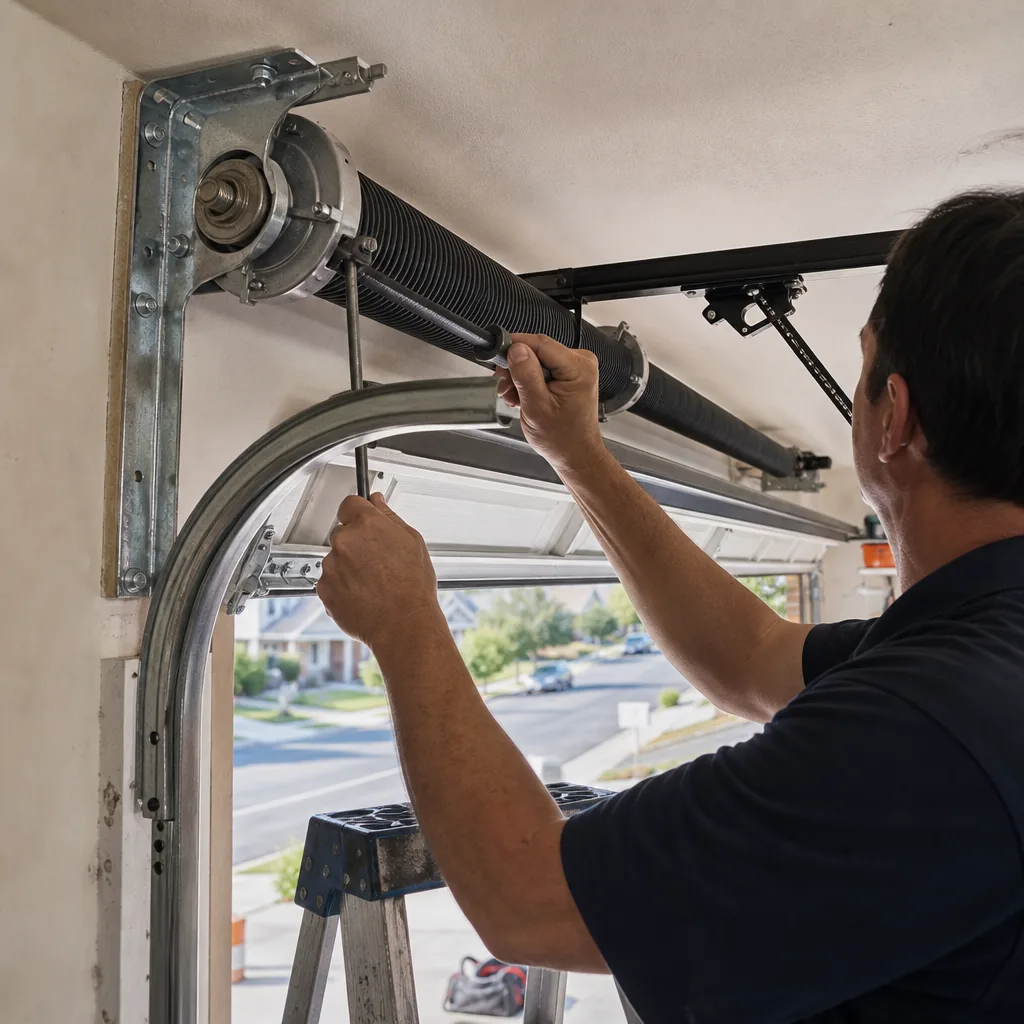
What to do: Don’t touch the spring. Don’t try to adjust it, don’t spray lubricant on it, don’t stand on a ladder and poke at it. A torsion spring under tension stores enough energy to break bone. Call someone who works on these every day. We quote torsion spring replacement over the phone for Otto’s Garage Door home service, and the price we give you is the price on the invoice.
Coastal Corrosion vs. Structural Rust: What Oceanside Salt Air Actually Does
Living near the beach means rust. Every Oceanside homeowner knows this about their patio furniture, their BBQ, their mailbox. But garage door hardware rusts differently because it’s not sitting in the open. It’s enclosed, partially protected, and in some spots it gets a constant micro-mist of salt vapor every morning when the marine layer rolls in off the Pacific.
Surface staining is normal and mostly harmless. You’ll see it on the bottom panel of the door, on the track brackets, on the hinges. It looks orange-brown, flat, and it doesn’t flake. You can wipe it, paint over it, or ignore it and the door keeps working fine. What we’re describing here is cosmetic, and in coastal north San Diego County it’s as predictable as June gloom.
Structural rust is different. Look for these three signs:
- Flaking or scaling. The metal isn’t just discolored, it’s shedding thin layers. If you run a finger along the track and a chunk comes off, that’s structural loss.
- Rust on the bottom brackets. Those brackets connect the cable to the door. If the bracket is rusting through, the cable anchor is compromised. When that bracket fails, the cable lets go exactly as we described in the section above.
- Pitting on the hinges. Small crater-like divots in the metal. A hinge with pitting can crack under load when the door is in the open position, and a broken hinge lets that corner of the door sag.
Oceanside homeowners near Buccaneer Beach, the harbor, and Loma Alta get hit hardest because of the onshore flow. One thing that helps is wiping the hardware down a few times a year with a dry rag and then applying a light machine oil to the hinges and rollers. Not WD-40. Actual oil. But if you’re seeing flaking, pitting, or structural loss, call before it fails.
Three Opener Behaviors That Mean Motor Trouble (And Two That Don’t)
Garage door openers are simpler than people think. The motor spins a gear, the gear drives a chain or belt, and the chain pulls the door along the track. When an opener starts acting strange, Oceanside homeowners usually assume the motor is dying. Sometimes it is. More often it isn’t. Here’s how to know the difference.
Behaviors that mean real motor or logic board trouble:
- The opener runs for a second, then stops, then runs again, then stops. That stutter pattern usually means the logic board is failing to maintain power. It’s seeing the door’s position wrong and cutting out mid-cycle. This doesn’t fix itself, and the opener will eventually stop responding entirely.
- The motor hums but the door doesn’t move. If you hear the motor running but the chain or belt isn’t moving, the drive gear has stripped. This is common on older LiftMaster and Chamberlain openers from the 1990s and early 2000s. We still see plenty of those in Oceanside garages.
- The door opens by itself at random times. Not a ghost. A failing circuit board sending phantom signals. This one matters because your garage is now wide open to the street or the alley, and you might not know it until the next morning.
Behaviors that are usually a sensor misalignment, not the opener:
- The door starts to close, then reverses and goes back up. Nine times out of ten this is the safety sensors at the bottom of the track. They’re either knocked out of alignment or there’s something in the beam’s path. Look for a small green light and a small amber light on the sensors. If one is blinking or off, realign it until both lights are steady.
- The remote only works when you’re close to the door. That’s usually an antenna or battery issue, not a motor problem. On the opener itself, check that the antenna wire is hanging down straight. Then replace the remote battery. If it’s still weak, the receiver may be going, and that’s a repair or replacement conversation we can have over the phone.
We work on every major brand, so whether you’ve got a Genie, a Raynor, or a Chamberlain, the fix is usually straightforward. Our garage door opener service in Oceanside covers motors, sensors, remotes, and full replacements with upfront pricing.
Why Your Door Runs Slow in Oceanside Winters
Cold air does two things to a garage door. It thickens the grease in the rollers and hinges, and it makes the metal parts contract slightly, which increases friction in the track. So a door that moves fine in August might feel sluggish when the thermometer drops to 45 at night. That’s normal, and it’s usually fixed with a simple lubrication job.
But sometimes slow means the spring is losing tension, and you can tell the difference by listening.
Here’s the test, described the way we’d do it standing in your driveway:
- Pull the release cord to disconnect the opener from the door.
- Lift the door by hand. It should feel relatively light. You should be able to lift a 200-pound door with one arm and minimal strain because the spring is doing the work. If the door feels heavy, like you’re deadlifting it, the spring is not delivering its rated tension anymore.
- Let go of the door halfway up. A correctly balanced door will stay roughly where you left it or drift only a few inches. A door with a weakening spring will sag noticeably or drop.
- Listen while you open and close the door manually. A door with old, gummy lubrication makes a grinding or scraping sound. A door with a failing spring sometimes makes a creaking or clicking sound near the top of the shaft.
If the door is heavy and sags, the spring is on its way out regardless of what the temperature is. In Oceanside we don’t get severe cold, but the temperature swings between night and day are enough to make marginal springs fail. We’ve been called out more than once after a January cold snap to find a spring that cracked during the night. If you’re not sure whether your door feels heavy, call us. A quick balance check is part of our free estimate, and I’ll tell you honestly whether the spring needs replacing or just the rollers need oil.
The Sounds Your Door Makes And What Each One Means
After 29 years of working on garage doors, I can usually diagnose the problem from across the room by sound alone. Here’s a field guide to the noises your door makes and what they’re telling you.
The loud bang. That’s a torsion spring snapping. It sounds like a gunshot or a car backfiring. If you hear this, the spring is done and the door should not be operated until it’s replaced. You’ll usually find the door is now extremely heavy to lift because the spring is no longer counterbalancing it.
The creaking or groaning. This is almost always dry hinges or dry rollers. The noise comes from metal rubbing on metal with no lubrication between them. It’s annoying, it’s common, and it’s fixable in ten minutes with the right oil. But if you hear a creak that’s specifically coming from the spring area near the top of the shaft, and it’s rhythmic with the spring’s rotation, that can indicate internal friction in the spring itself, which is a precursor to failure.
The grinding. This is usually one of three things: the rollers are worn out and the bearings are shot, the track is misaligned and the door is scraping against it, or the opener’s gear is disintegrating. If the grinding is coming from the motor unit while the door barely moves, it’s the opener gear. If it’s coming from the door itself, shut it down and check the rollers.
The popping or clicking during movement. Often this is a roller hitting a dented or misaligned section of track. Or it’s a hinge that’s loose and shifting as the door passes over the curve. Both are relatively minor fixes, but if left alone, a loose hinge can eventually break and drop one corner of the door.
The rattling. Loose hardware. Nuts and bolts vibrate themselves loose over time, and the clamor gets worse the more the door is used. On an opener that’s chain-driven, the chain itself can go slack and rattle against the rail. That needs an adjustment, and it’s a quick one.
Any new sound is worth investigating. Your door has a “normal” voice and when it starts speaking differently, pay attention. Our garage door installation team in Oceanside has seen every version of these sounds and knows which ones are safe to ignore and which ones aren’t.
A Five-Minute Visual Check You Can Do This Weekend
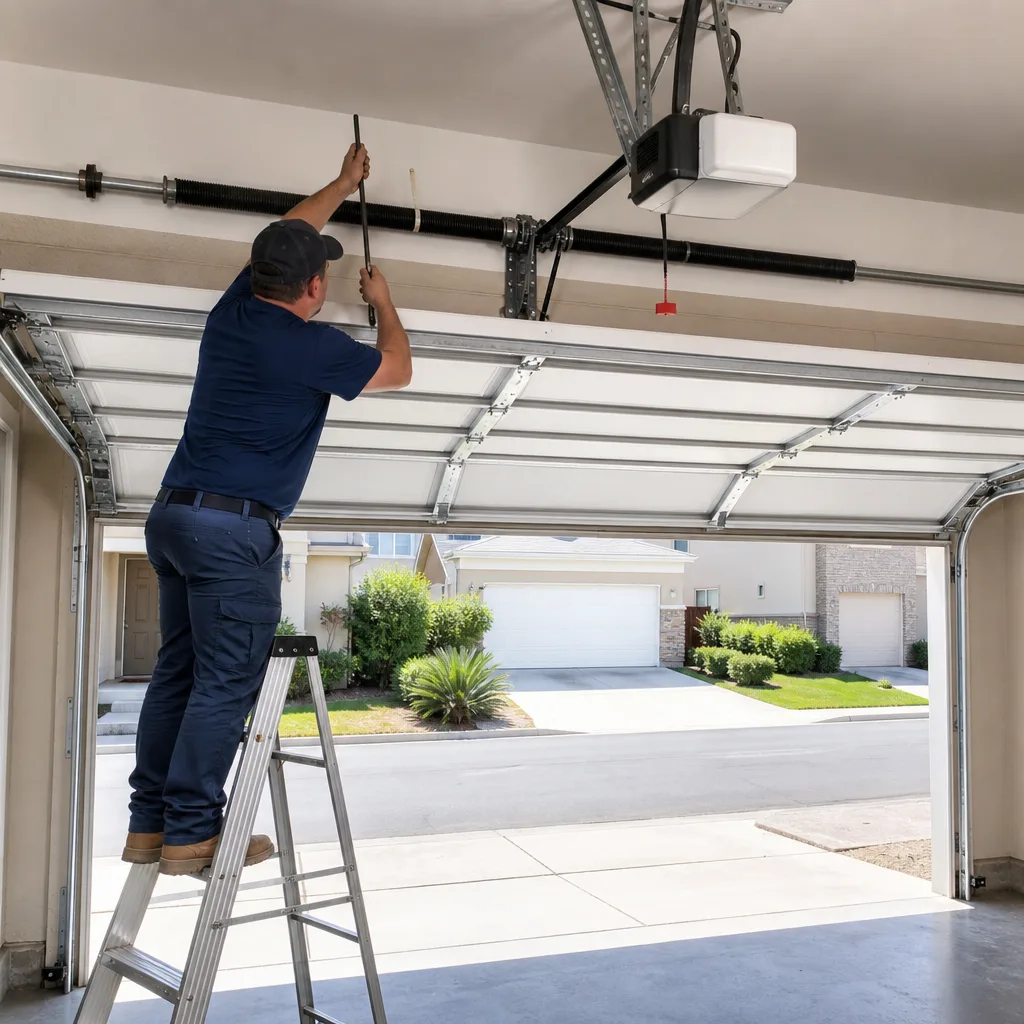
Here’s the simplest maintenance routine in the book. It takes five minutes, requires no tools, and covers the five things that most commonly fail. Do this twice a year. I recommend doing it on the weekend when daylight is good. It might save you an emergency call.
- Look at the cables. Stand inside the garage, door closed. Examine both cables from bottom bracket to top drum. Look for fuzzy spots, frayed wires, or obvious flattening.
- Look at the spring. Get a step ladder and look at the torsion spring above the door. Check for a gap between coils. Check for rust staining around the spring’s midpoint. Don’t touch anything.
- Look at the bottom brackets. These are the metal plates that hold the bottom corners of the door and anchor the cables. Look for rust, cracking, or sagging.
- Look at the rollers. Rollers should be round and sit fully on the track. If a roller is worn flat on one side or wobbling, it’s nearing the end. Nylon rollers will eventually crack. Steel rollers will wear down.
- Pull the release cord and lift the door manually. Feel the weight. Does it feel balanced? If not, see the section about slow doors above.
If everything looks clean and the door lifts smoothly, you’re done until next time. If you spot something that looks off, take a photo with your phone and call us. We’ll look at it with you over the phone and tell you whether it’s urgent or can wait. That’s what the Oceanside garage door opener and repair team is here for. No charge for the conversation.
Common Mistakes to Avoid
- Greasing the track. The track should not be greased. Grease on the track attracts sand, and in Oceanside, sand is everywhere. The rollers should roll on a clean, dry track. Oil the rollers and hinges, not the track.
- Using WD-40 as a garage door lubricant. WD stands for water displacement. It’s not a long-term lubricant. It strips the good grease out and leaves the parts dry. Use a silicone spray or a lithium grease made for garage doors.
- Ignoring a door that’s slightly crooked. A door that sits unevenly when closed is telling you something. It might be a stretched cable, a broken spring on one side, or a track issue. Running the door with a crooked alignment makes every problem worse.
- Trying to adjust or replace a torsion spring yourself. Release the tension on a torsion spring without the proper winding bars and you can lose fingers, break an arm, or worse. This is the single most dangerous DIY task in residential home maintenance. Don’t do it.
- Relying on the auto-reverse sensor to catch everything. The sensor at the bottom of the track only detects objects breaking the beam. It doesn’t detect a failing cable or a door that’s 40 pounds heavier than it should be. The sensor isn’t a substitute for visual inspection.
- Deciding to wait until it completely breaks. A door that’s showing warning signs is still cheaper to fix than a door that just dropped on your car bumper. Waiting converts a $200 maintenance item into a $1,200 replacement job.
- Assuming coastal homes are fine because the door looks new. A five-year-old door in Oceanside can have ten-year-old hardware if the builder reused the original opener and springs. Age of the door isn’t the same as age of the parts. Check the hardware.
When to Call a Professional
Call the day you see frayed cable, the day you see a spring gap, the day the door starts feeling heavy, or the day you hear a bang. These are not wait-and-see items. A door you’ve been nursing for months can fail in the middle of a workday when the car is still in the garage and your whole schedule is inside that car. We’ve also had calls from Oceanside homeowners who couldn’t close their garage at all, leaving tools, bikes, and camping gear open to anyone who walks by. A door stuck open is an invitation to the neighborhood. None of these situations are worth the risk. Otto’s Garage Door offers free estimates in Oceanside. Call (760) 819-7361 and a live person answers, often Otto himself. We quote on the phone, the price doesn’t change at the door, and the 90-Day Done Right Promise is written on every invoice. If it’s not right, one call brings us back.
Frequently Asked Questions
The most serious warning signs are frayed cables, a visible gap in the torsion spring, and a door that feels heavy when you lift it manually. Any one of these means the door can fail without warning, and the failure can drop hundreds of pounds onto whatever is underneath. If you see any of these, stop using the door and call a professional.
In Oceanside, a cable replacement typically runs between $150 and $250, a torsion spring replacement between $180 and $350 depending on the spring type, and a new opener between $400 and $700 installed. Every job at Otto’s Garage Door gets a firm quote before work starts, and that quote is the price on the invoice. Call (760) 819-7361 for an exact quote on your specific door.
Yes. We answer calls 24/7 and we keep same-day availability for emergencies in Oceanside and the surrounding area. If your spring snapped and your car is trapped in the garage, tell us when you call and we’ll prioritize your visit. A live person answers, not a recording.
No. Grinding usually means metal-on-metal contact in the rollers, track, or opener gear. Every time you run the door, the problem gets worse. A grinding opener gear will eventually strip completely and the door won’t move. A grinding roller will eventually wear through and could jump the track. Stop using the door and have it looked at.
The marine layer in Oceanside carries salt vapor that settles on metal surfaces every morning. It accelerates rust on cables, hinges, brackets, and springs. Homes within a mile or two of the coast will see this faster than homes east of the 5. It’s normal, but it means coastal homeowners need to inspect their hardware more often than inland homeowners.
No. We don’t charge a trip fee for estimates inside our service area, and we offer a free second opinion on any written estimate you’ve gotten from another company. You’ll know the price before any work begins, and the price we quote is the price you pay. Call (760) 819-7361 to schedule.
The Bottom Line
A garage door is 200-plus pounds of metal, glass, and cable held in balance by a spring under high tension. It works because every part plays its role. When one part starts to fail, it tells you with a sound, a movement, or a visual cue. Your job as a Oceanside homeowner is to know which cues matter. Frayed cables, a spring gap, a heavy door, or a new sound are not negotiable. They mean stop and call. The rest, the slow winter door, the squeaky hinges, the intermittent remote, those are normal wear items with straightforward fixes. Pay attention to the big stuff and the small stuff stays small. When you need us, Otto’s Garage Door repair team in Oceanside is one call away at (760) 819-7361.
Written by Otto Reinhardt, Owner at Otto’s Garage Door, serving Oceanside since 2004.