
Last updated September 10, 2026
Full 25-point door and opener safety check with every visit - springs, cables, rollers, tracks, and your LiftMaster or Chamberlain opener included
You get a price before we start. It does not change when the truck arrives.

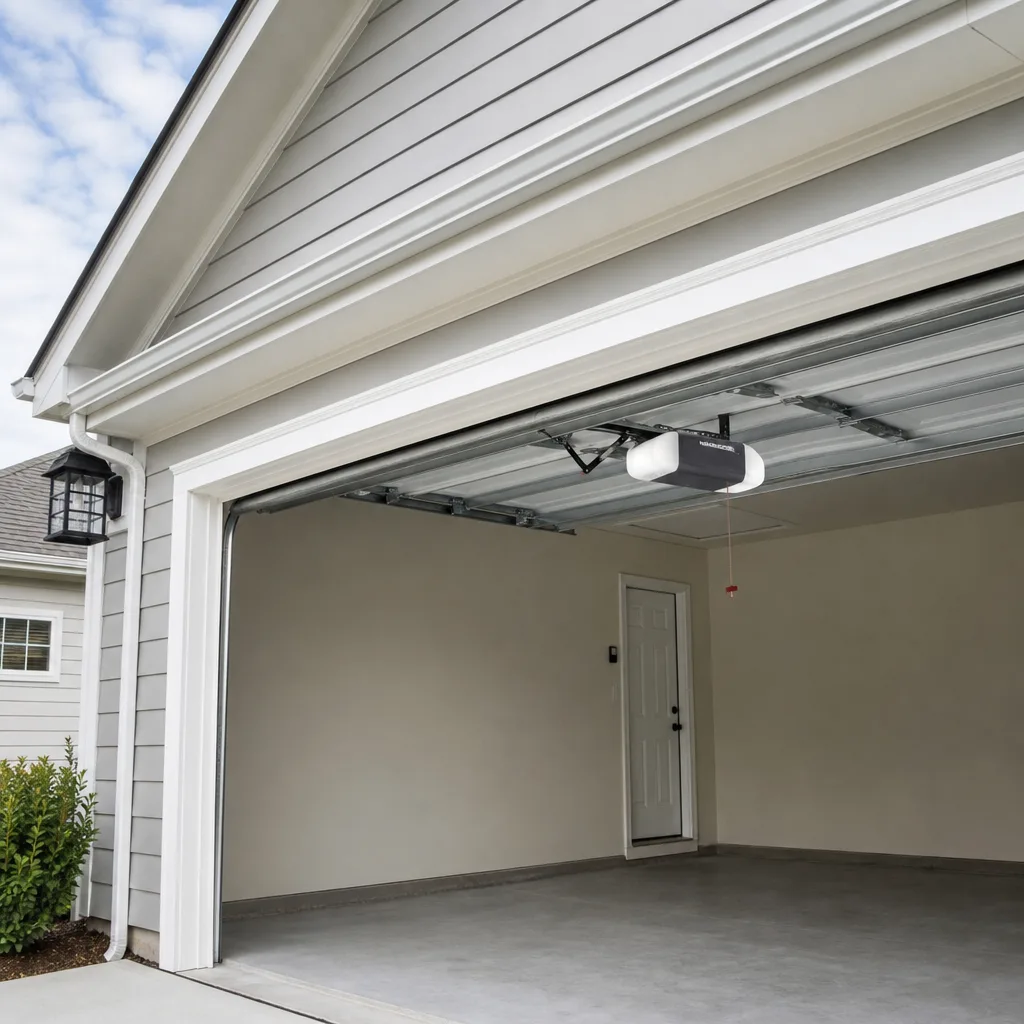
 Before
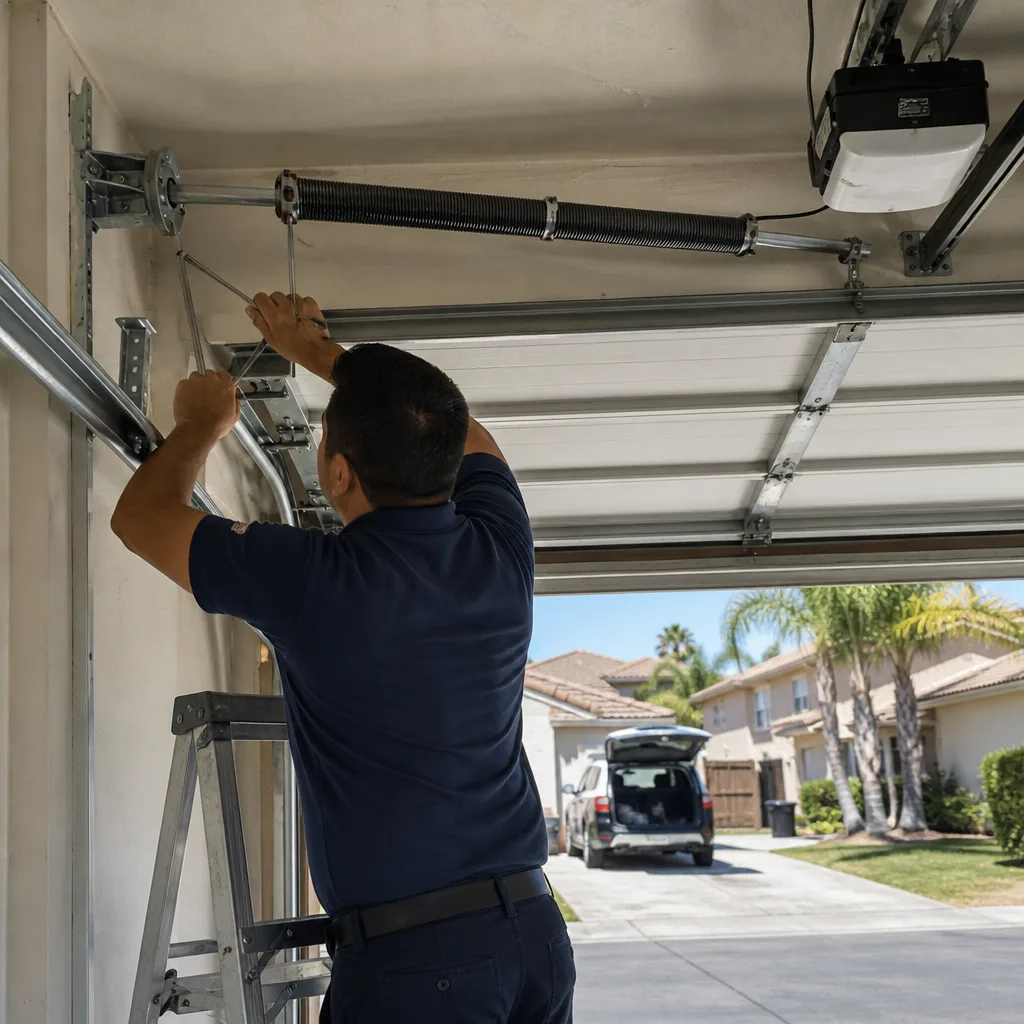 After
After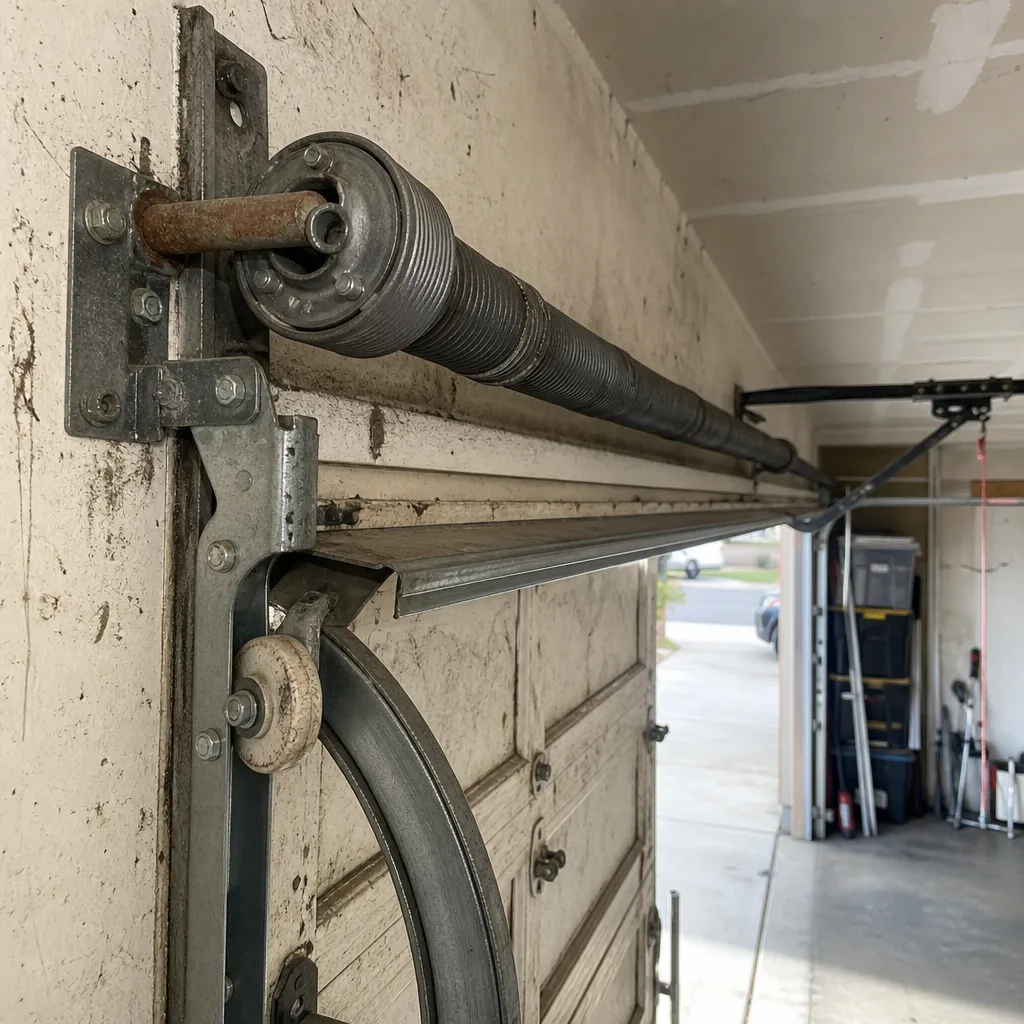 Before
 After
After Before
 After
AfterSeasonal Garage Door Care for Oceanside: Year-Round Homeowner’s Guide
Most seasonal garage door advice is written for places with snow, ice, and a hard freeze that splits seals and snaps springs. Oceanside gets none of that, so the standard fall/spring checklist is close to useless here. What Oceanside does get, every year without fail, are two distinct weather windows that quietly age your door faster than its manufacturer ever planned for: the dry Santa Ana wind season from late September through November, and the damp marine layer season from March through July. This guide is built around those two Oceanside threat windows, not a generic calendar. For a deeper dive into local installation and maintenance, see The Complete Guide to Garage Door in Oceanside. You’ll learn what actually breaks here, when to check it, and what’s a five-minute fix versus a job for someone who carries the parts on the truck.
Quick Answer
In Oceanside, garage door care should follow two local seasons rather than the traditional four: prep the hardware, seals, and opener before the dry Santa Ana winds arrive in late September, and do a corrosion check after the marine layer lifts in April. The biggest year-round enemies here are coastal humidity, UV exposure on weatherstripping, and sand in the tracks. Spend about 30 minutes on maintenance twice a year, aligned to those windows, and most breakdowns in Oceanside simply never happen.
Table of Contents
- Why Oceanside Has Two Garage Door Seasons, Not Four
- September: The Pre-Santa Ana Checklist
- April: The Post-Marine-Layer Corrosion Check
- Coastal UV and Your Weatherstripping: Why It Fails Early Here
- Sand in Tracks and Rollers: What Actually Works
- Year-Round Opener Care for Oceanside’s Temperature Range
- Common Mistakes to Avoid
- When to Call a Professional
- Frequently Asked Questions
Why Oceanside Has Two Garage Door Seasons, Not Four
Oceanside sits in a narrow coastal band where the Pacific keeps daytime temperatures mild almost year-round, but that stability is deceptive. What changes fast here is humidity. During Santa Ana events in October and November, the relative humidity can drop from a saturated 80% down to single digits within a single afternoon while the temperature climbs. Wood and rubber don’t like that swing. A dried-out bottom seal or a cracked hinge bushing under Santa Ana conditions is as predictable as a pothole after rain.
The other half of the year brings the opposite problem. From about March through July, the marine layer rolls in most nights and lingers through the morning. Your garage door sits in 70-90% humidity for hours at a stretch, with dew condensing on metal surfaces. If the hardware has any exposed bare metal, microscopic rust starts within weeks. That rust doesn’t scream for attention; it just binds hinges, pits rollers, and shortens the working life of a spring by a decade or more. A 10,000-cycle spring that should last seven or eight years can fail in four here if the coils corrode. We’ve replaced springs on doors less than five years old in Oceanside that were rusted through in places, and the marine layer did it. For help weighing your options when repairs add up, read Garage Door Cost Breakdown: The Oceanside Homeowner’s Reference for 2026. No other single factor accounts for that. So: two checks a year, matched to these two windows. That’s the whole framework.
If you want a deeper dive on how all the moving parts work together, including springs and cables, start with our Garage Door Repair in Oceanside page. It covers what wears out and why, and what a proper repair actually involves.
September: The Pre-Santa Ana Checklist
The Santa Ana season in Oceanside arrives with a specific signature: low humidity, warm nights, and wind that shifts offshore and carries dry desert air. For your garage door, this is a rapid-drying event. Grease that was doing fine in July’s damp air becomes stiff and crusted by November. Rubber that was supple gets brittle. The pre-Santa Ana check is about catching the parts that are about to fail, not the ones that already have.
Start in mid-September, before the first real dry spell hits. Here’s the step-by-step order we use when we inspect a door in Oceanside before wind season:
- Look at the weatherstripping on the bottom of the door. Run your fingers along it. If it’s cracked, flattened, or leaves visible light under the door, it’s done. Replacement stripping is inexpensive; the damage a failed seal causes is not. Gaps let Santa Ana dust and hot air pour in, and that same gap lets coastal damp in during the marine layer months.
- Check the hinge bolts and track brackets. Low humidity doesn’t loosen bolts, but the seasonal expansion and contraction of the metal and the wall does. A loose bracket under wind load will let the track flex, and a flexing track is how a door comes off its rollers. Snug anything loose. If a bolt spins without tightening, the hole is stripped and needs a fix, not a bigger screw.
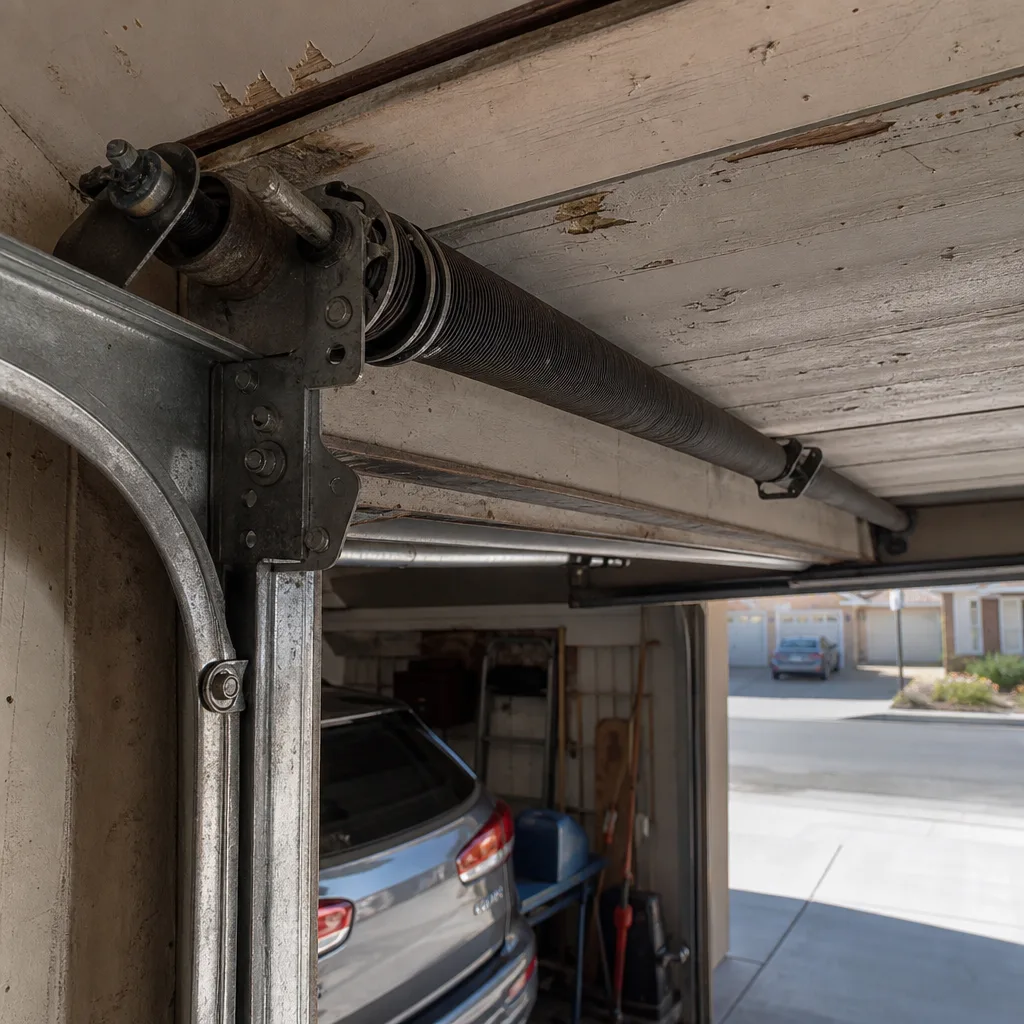
- Look at the spring for coil gaps or shine. A torsion spring should have consistent, adjacent coils. If you see a gap, that spring is broken. If you see shiny metal at the end where the cone meets the spring, that’s a warning sign of a binding spring, and it fails at the worst possible moment. Do not touch it. A door is 200 pounds riding on two springs. Respect it. This one is a job for a pro.
- Test the auto-reverse function on the opener. Set a 2×4 flat on the ground under the door and close the door on it. The door should reverse within a couple of seconds of contact. If it doesn’t, disconnect the opener and call someone. This is the single most important safety feature on your door, and it has to work well before wind season, not after.
- Wipe the photoelectric eyes. Dust and salt haze settle on the lenses, and the low sun angle in fall can trigger false obstruction readings. A clean lens with a dry cloth often fixes a door that refuses to close on a sunny afternoon.
- Lubricate the moving parts with a garage door specific lubricant, not WD-40. Use white lithium or a silicone spray on hinges, rollers, and the torsion spring. You want a lubricant that stays put and doesn’t attract sand. Wipe off the excess. A dry, clean lube job going into Santa Ana season keeps the door quiet and the hardware alive.
One more thing we see every year, almost always in September and October: the rubber grommets and bushings where the opener rail mounts to the motor head shrink in low humidity and start rattling. The door sounds like it’s failing, but it’s a $12 part and five minutes of work. If you hear a new rattle only during the Santa Ana period, that’s usually the culprit. If you’re not sure whether to lube or replace something, our Garage Door Opener in Oceanside page walks through opener wear and what’s worth fixing.
April: The Post-Marine-Layer Corrosion Check
By late April, the morning fog has usually burned off for good, and the marine layer stops making nightly appearances. That’s the moment to look at what the damp months left behind. Corrosion builds quietly here. It doesn’t announce itself in March; it just weakens things slowly until a roller seizes or a cable frays or a spring snaps with no warning at all.
Here’s the April checklist, in order of what we see most often on Otto’s Garage Door home service calls in Oceanside and the surrounding county:
- Roller bearings. Salt-laden air eats the cheap bearings inside non-sealed rollers. Look for rollers that are discolored, orange-tinted, or that don’t spin freely when you run your hand along them. A seized roller grinds down the track, and a worn track is a bigger fix than any roller. If you hear a grinding noise when the door moves, stop running it and call. We can usually salvage a door that’s caught early; by the time the noise is loud and constant, the track is often scored too.
- Cable strands. Look at the lift cables on both sides. A fray here is not a wear item to monitor; it’s a stop-using-the-door item. A snapped cable drops the entire weight of the door onto whatever is left. If you see broken strands, do not run the door. This is a call-us kind of morning.
- Bottom seal condition. If the seal is stiff, cracked, or sits unevenly, it’s been baked by UV and softened by moisture. A bad bottom seal lets moisture, dust, and rodents in, and it makes the door sit wrong when closed. This one shows up a lot in April because the winter rain plus spring damp finished off a seal that was marginal in August.
- Bare metal exposure. Look for paint chips, scratches, or rust blooms on the door panels, hinges, and tracks. Coastal air means exposed steel rusts faster than the manufacturer’s corrosion warranty assumes. If you catch it as a chip or a small bloom, a scuff and a proper touch-up often stop it. If the rust is on the track, that’s a different conversation: rusted tracks can’t be saved with paint.
- Humidity inside the opener housing. Open the opener cover (after unplugging or after pulling the disconnect and making sure it can’t run) and look for signs of corrosion on the contact points or any white, powdery build-up. Marine layer moisture condenses inside electronics too. If the opener ran fine all winter and starts acting up in spring, suspect moisture inside the housing, not the gears.
There’s a reason this check matters more in Oceanside than in, say, Vista or Fallbrook. The further west and closer to the water you live, the more nights of marine layer your door endures. A door in Fire Mountain or South Oceanside gets hit harder than a door ten miles inland. If you’re within two miles of the coast, consider doing this check twice during the damp months: once in early March and once at the end of April. If you find cable fraying or a seized roller, that’s beyond a weekend project. Our Garage Door Installation in Oceanside page covers what goes into replacing badly damaged hardware and when repair stops making sense.
Coastal UV and Your Weatherstripping: Why It Fails Early Here
Manufacturer specs for vinyl and rubber weatherstripping assume a generic climate: some sun, some shade, occasional temperature extremes. Oceanside is not a generic climate. The combination of intense UV exposure (often with no cloud cover between April and October) and salt air breaks down vinyl weatherstripping on an accelerated timeline. A bottom seal that a manufacturer rates for five years typically starts cracking along the compression points in three here. The side and top seals often go brittle in two.
What does that mean practically? The soft vinyl begins to harden first. It loses its ability to compress and rebound. Then hairline cracks appear along the folded corners of the bottom seal, which is now allowing daylight, water, and bugs under the door. Once the seal is compressed flat and won’t bounce back, it’s done, and no amount of treatment will bring it back. Replacing it is a quick job, and the material cost is low. The labor is the same whether you catch it at the first cracks or wait until it’s in pieces on the driveway, but the damage from waiting, in the form of dried-out hinges and a garage full of dust, is real.
Here’s the rule we use in Oceanside: touch the bottom seal every time you replace the batteries in your smoke detector. If it feels hard like a plastic cutting board, not springy like a new dish glove, plan to replace it that month. If it’s cracked anywhere along the flat bottom, replace it now. The same applies to the thin vinyl trim around the perimeter of the door opening. That stuff isn’t decorative; it’s a seal, and once it’s brittle it stops sealing.
One more thing about coastal UV: painted steel doors fade faster here, especially if the door gets afternoon sun. A door facing south or southwest on an Oceanside hillside will show chalky oxidation within a few years. Washing it twice a year with a mild detergent and a soft brush removes the salt film that accelerates paint breakdown, and a premium exterior paint touch-up when it first starts to chalk is far cheaper than refinishing a door that’s been left to fade for a decade.
Sand in Tracks and Rollers: What Actually Works
Oceanside’s prevailing west wind doesn’t just move marine layer air inland; it also carries fine beach sand, especially for homes west of El Camino Real or near Buccaneer Beach, South Pier, and the harbor. That sand finds its way into the vertical and horizontal track channels of your garage door, and once it’s in there, it acts like grinding compound.
The instinct most people have is to blow it out with compressed air. Don’t do it. Compressed air sends that fine sand deeper into the upper track corners, into the roller bearings, and into every crevice in the opener rail. What you want to do is remove the sand, not relocate it to somewhere worse.
Here’s the right way to deal with sand in your tracks:
- Wipe out the tracks, don’t spray them. Use a dry paper towel or a clean rag, and run it along the inside of the track channels. Do the vertical sections first, then the horizontal. You’ll be amazed how much grit comes out.
- Clean the rollers themselves. Wipe each roller with a rag. If any roller has visible pitting or won’t spin after you’ve cleaned it, replace the roller. Sand in a sealed bearing means the bearing is now grinding itself to death. The roller is a consumable, and it’s cheaper to replace than a track.
- Vacuum what you can’t reach. A shop vac with a crevice tool gets the corners where the horizontal and vertical tracks meet. Don’t use your house vacuum; you’ll ruin it.
- Check the opener rail. If your opener uses a screw drive or belt rail, wipe the rail too. Sand on a screw drive makes a grinding noise that sounds expensive and is usually just grit. But if you’ve run it sandy for months, the threaded rod may already be worn, and that’s a replacement, not a cleaning.
- Prevent the next load. If you live close enough to the beach that this is a recurring problem, consider a bottom seal with a tighter profile, and keep the area outside the door swept. The less sand that blows in, the less you’ll deal with.
This is a common problem from South Oceanside up through the Fire Mountain area, and it’s one of the few Oceanside-specific garage door issues that gets missed by generic maintenance advice. Most of the country doesn’t clean beach sand out of door tracks. You do. The fix is simple and the materials cost nothing, so there’s no reason to let it grind.
Year-Round Opener Care for Oceanside’s Temperature Range
Oceanside doesn’t freeze and it rarely breaks 85 degrees, which means the mechanical parts of a garage door opener have an easier life here than they would in Phoenix or Minneapolis. But the electronics live in a salt-moisture environment for months at a time, and most opener issues we see in Oceanside are moisture-related, not mechanical. The logic board inside the housing corrodes slowly at the contact points. The wall button starts ghosting. The remote signal weakens. The motor itself is almost never the problem.
If your opener is acting up, start with the cheap checks:
- Check for corrosion on the wall button contacts. If the button works sometimes and not others, and it’s on an exterior-facing wall, moisture inside the wall cavity is a likely culprit. Pull the button off, look for green or white build-up on the contacts, and clean it with a little contact cleaner if it’s mild. If the corrosion is inside the button unit itself, replace the button.
- Clean the safety sensor lenses and the sensor wiring. We covered the lenses earlier, but the wire connections behind the sensors also corrode in marine air. If the door reverses for no reason, and the sensors are pointed at each other and the lenses are clean, the problem may be a corroded wire connection. That’s usually an easy fix.
- Check the wall outlet and the power cord connection. In a humid garage, the outlet itself can corrode enough to cause intermittent power drops. If the opener runs fine sometimes and seems dead other times, start at the plug.
- Don’t ignore a slow or noisy opener. Some of our neighbors oil the rail and call it fixed. But a noisy screw drive or chain drive opener that used to be quiet is telling you something has worn. The longer it runs that way, the more parts it chews up. It costs less to adjust or replace a drive component early than to let it eat the gear.
We see a measurable jump in opener service calls every year in late spring, right as the marine layer is at its peak. The opener behaves erratically; the homeowner assumes the motor is bad; and half the time it’s moisture in a connector, a corroded wall button, or a tired capacitor. If the opener is straining, the problem is almost never the opener. Before you replace a unit that costs hundreds of dollars, let someone look at the $20 parts. For more on what’s worth repairing versus replacing, check the Garage Door Opener in Oceanside page.
Common Mistakes to Avoid
- Following a generic four-season maintenance schedule. A chart written for Ohio tells you to prep for snow in October and inspect for ice damage in March. Oceanside doesn’t have those. Prep for Santa Anas in September and check for marine layer corrosion in April, and you’ll catch the failures that actually happen here.
- Lubricating with WD-40. It’s a solvent, not a lubricant, and it strips away whatever lubrication is left. Use a garage door specific spray or white lithium grease. And never grease the track itself; it’s supposed to be clean and dry so the rollers can grip and roll.
- Using compressed air on sandy tracks. This drives the sand up into the corners and into the bearings. Wipe the sand out; don’t blow it in deeper.
- Waiting until the door stops working to look at it. A broken spring is dramatic, but the things that lead to a broken spring are quiet: a dry bearing, a rusty cable drum, a misaligned track. Twice a year is all it takes to see most of it coming.
- Thinking a noisy door is normal. A garage door should not sound like a garbage disposal. A squeak is a dry part. A grind is a part that’s eating another part. Neither one fixes itself.
- Replacing the whole door when only the seal is shot. A cracked bottom seal looks bad and lets in the elements, but it’s a $20-to-$100 part. You don’t need a new $2,500 door. Unless the door panels themselves are damaged or rusted through, the seal is a simple swap.
- Leaving the auto-reverse check for “someday.” It’s a five-minute test with a 2×4, and it verifies the most important safety system on your door. Do it twice a year. If it fails, fix it now.
When to Call a Professional
Some things are safe to handle with a rag, a wrench, and a can of the right lubricant. Others are not. Garage door springs and cables are under tremendous tension, and when they fail, they fail violently. Never attempt to adjust, replace, or unwind a torsion spring yourself, and don’t touch a fraying lift cable. If you see a gap in the spring coils, shine at the spring ends, or broken cable strands, leave the door closed, pull the opener disconnect if the door is stuck halfway, and call someone who carries the parts and knows how to release the tension safely.
We also recommend calling in a professional when a door has come off its tracks, when the track is rusted or scored, or when an opener fails the auto-reverse test. These are not weekend fixes, and getting them wrong is expensive in the best case and dangerous in the worst. Otto’s Garage Door offers free estimates throughout Oceanside. Call (760) 819-7361 and we’ll give you a straight answer and a real number.
Frequently Asked Questions
Do a full check twice a year in Oceanside: mid-September before the Santa Ana winds start, and late April after the marine layer season ends. That schedule matches the two local weather patterns that actually damage doors here: extreme dryness in fall and heavy coastal moisture in spring. A quick visual and lubrication pass takes 30 minutes and prevents most breakdowns in Oceanside. If you’re within two miles of the coast, add a light corrosion check in early March as well. For a precise quote on any of the quarterly or seasonal work mentioned here, call (760) 819-7361.
Yes, salt air accelerates spring corrosion measurably in Oceanside. Salt particles from the marine layer settle on the spring coils, and when moisture condenses overnight, you get the same electrochemical rusting process that pits metal railings and car chassis. Over time, the spring develops surface pits that weaken the steel and shorten its cycle life. I count spring cycles the way you count tire miles; a spring rated for 10,000 cycles may give you 6,000 or 7,000 on a house close to the water. A light lubricant layer on the spring helps, and a visual check for rust blooms twice a year catches the worst of it. If your spring shows surface rust or you don’t know its age, call (760) 819-7361 for a free inspection.
Sometimes. In the winter and spring, marine layer moisture washes away or degrades lubricant, and you’ll hear squeaks and groans that go away after a proper lube. But if a door is grinding, scraping, or making a rhythmic thumping sound, that’s not a moisture issue; that’s a mechanical problem like a failing roller bearing or a loose bracket. Don’t assume coastal damp explains every noise, especially if the noise started suddenly. If you’re unsure whether a new sound is harmless or expensive, call (760) 819-7361 and describe it; we’ll tell you over the phone what it probably is and whether it needs a look.
A garage door specific silicone or lithium spray works best in coastal Oceanside. These lubricants adhere to hinges, rollers, and the torsion spring without attracting sand the way a heavy grease does, and they don’t wash off in high humidity the way a dry film product can. Apply it lightly to the hinge pins, roller bearings, and the spring coils, then wipe off the excess. Never use WD-40 for this; it’s a solvent that removes existing lubrication. If your door is still noisy after a proper lube, there’s a mechanical issue, not a lubrication issue.
For non-tension parts, yes: cleaning tracks, wiping sensors, light lubrication, and replacing a bottom seal are all doable with basic tools. For anything involving springs, cables, track realignment, or opener wiring, no. Springs and cables are under enough tension to cause serious injury or death if they let go, and getting them wrong leaves your door dangerous. We get calls from smart, capable homeowners all over Oceanside who know their way around a wrench but know better than to touch a torsion spring. If you’re unsure where to draw the line, DIY vs Professional Garage Door: The Oceanside Homeowner’s Decision Guide lays it out clearly. The honest answer: keep the simple stuff simple, and leave the dangerous stuff to someone who does it every day.
A basic seasonal tune-up in Oceanside typically runs between $100 and $200 if nothing is worn out, and that includes lubricating the hardware, checking the spring balance, testing the auto-reverse, and a quick inspection of the seals and cables. If the visit finds a part that needs replacing, like bottom weatherstripping or a worn roller, you’ll know the exact added cost before any work is done, and the price is quoted on the phone and held at the door. Otto’s Garage Door offers free estimates for seasonal maintenance, plus $40 off any repair over $200. Call (760) 819-7361 to schedule.
The Bottom Line
Oceanside doesn’t do winter the way the rest of the country does, but it does have two distinct garage door seasons, and ignoring them is what leads to breakdowns. Prep for the Santa Ana dryness every September: check the seals, lube the hardware, and test the auto-reverse. Check for corrosion every April: look at the rollers, cables, and opener electronics that the marine layer was working on for months. Clean beach sand out of the tracks by wiping, not blowing. Replace weatherstripping when it turns hard, not when it falls off. That’s the whole system: right checks, right time, right respect for the dangerous parts. For more guides & resources tailored to Oceanside homeowners, visit our blog.
Written by Otto Reinhardt, Owner at Otto’s Garage Door, serving Oceanside since 2004.